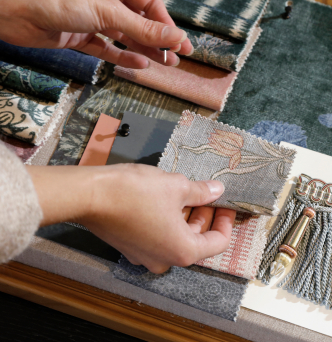

For Miranda Sinclair, fabric is more than a decorative flourish. It is what gives a room its direction.
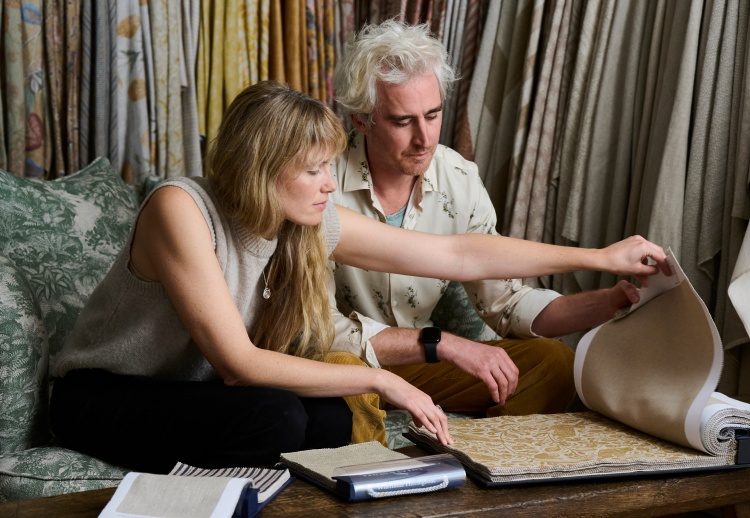
“I love looking at fabrics and thinking, what can I do with that?” she says.
It is a question that comes naturally to a stylist and creative director with a background in textile design and more than a decade spent working at the highest level of editorial interiors. There is a playful quality to the way she works with fabric, always testing what it might do.
“Fabric for me is always really important in a space… it’s often actually the starting point. I’m so drawn to colour and pattern and texture.”


An eye for textiles
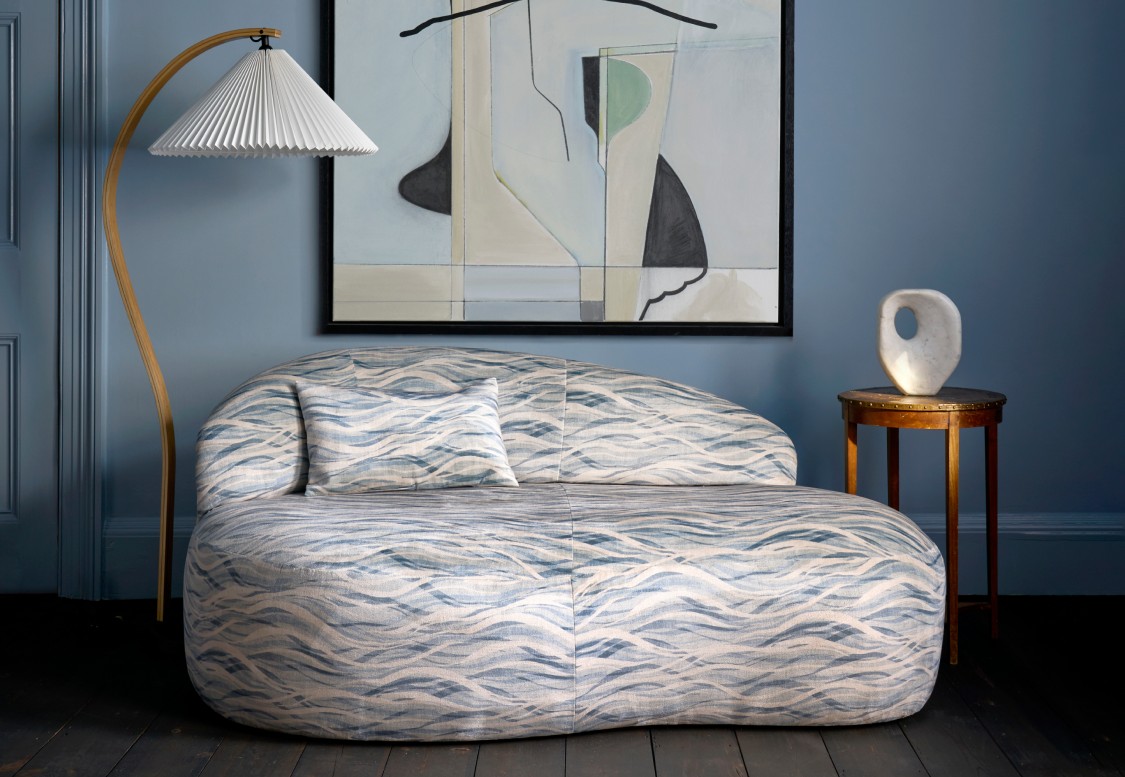
We invited Miranda to bring her own perspective to the FRAME collection through the Muse sofa, upholstered in a softly textured natural bouclé.
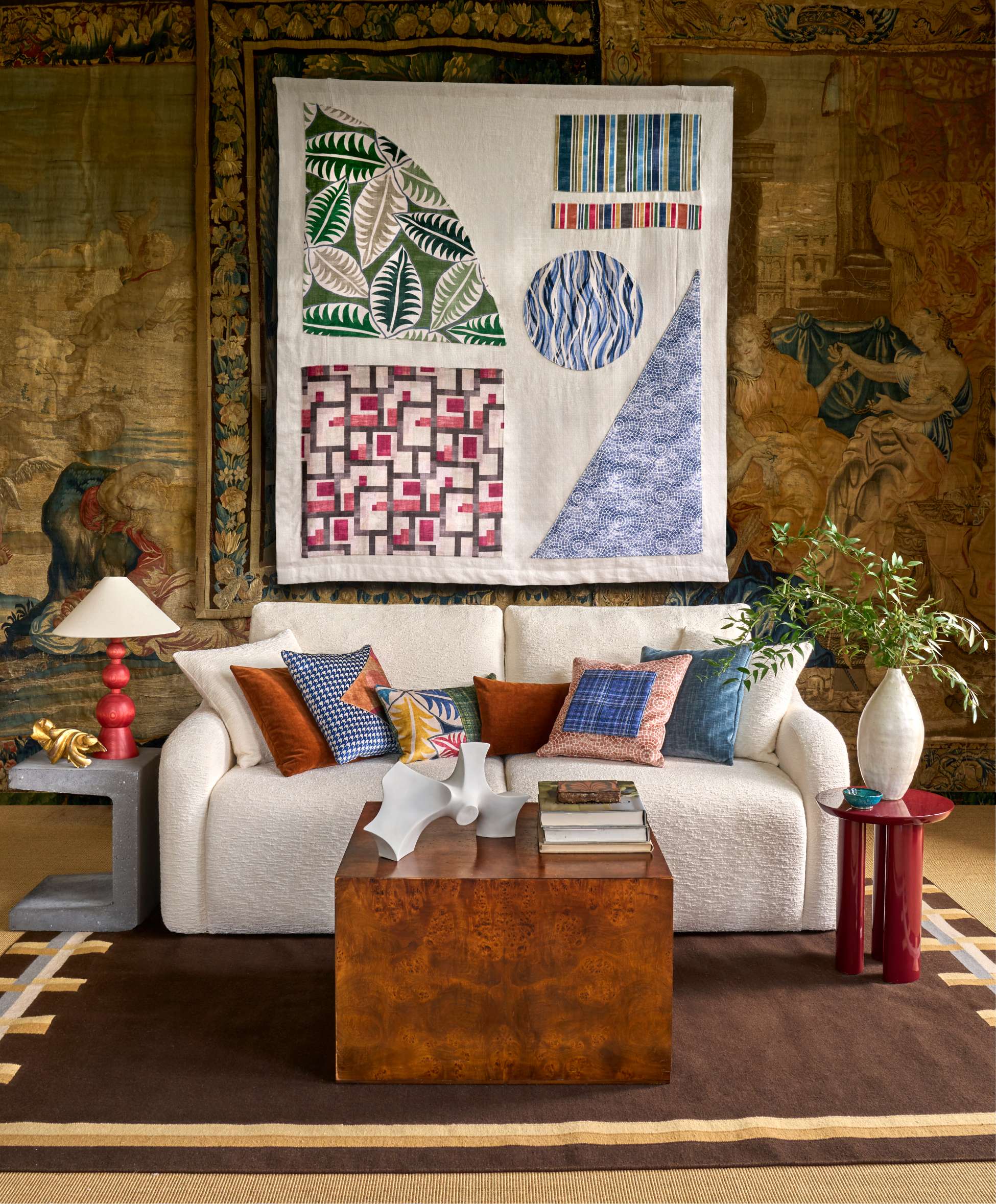
The setting was Nithurst Farm, a house where raw concrete, strong architectural lines and historic tapestries create their own compelling visual language. Against that backdrop, Muse’s simple curves felt immediately distinct.
“I started to think about how the lines of the sofa kind of worked in contrast to the lines of the architecture, this Brutalist space. I also really liked the bouclé texture with the texture of the raw concrete walls.”
“I like this idea of echoing some of the shapes from the architecture and then the curves from the sofa, thinking about sort of geometry, thinking of something quite abstract.”
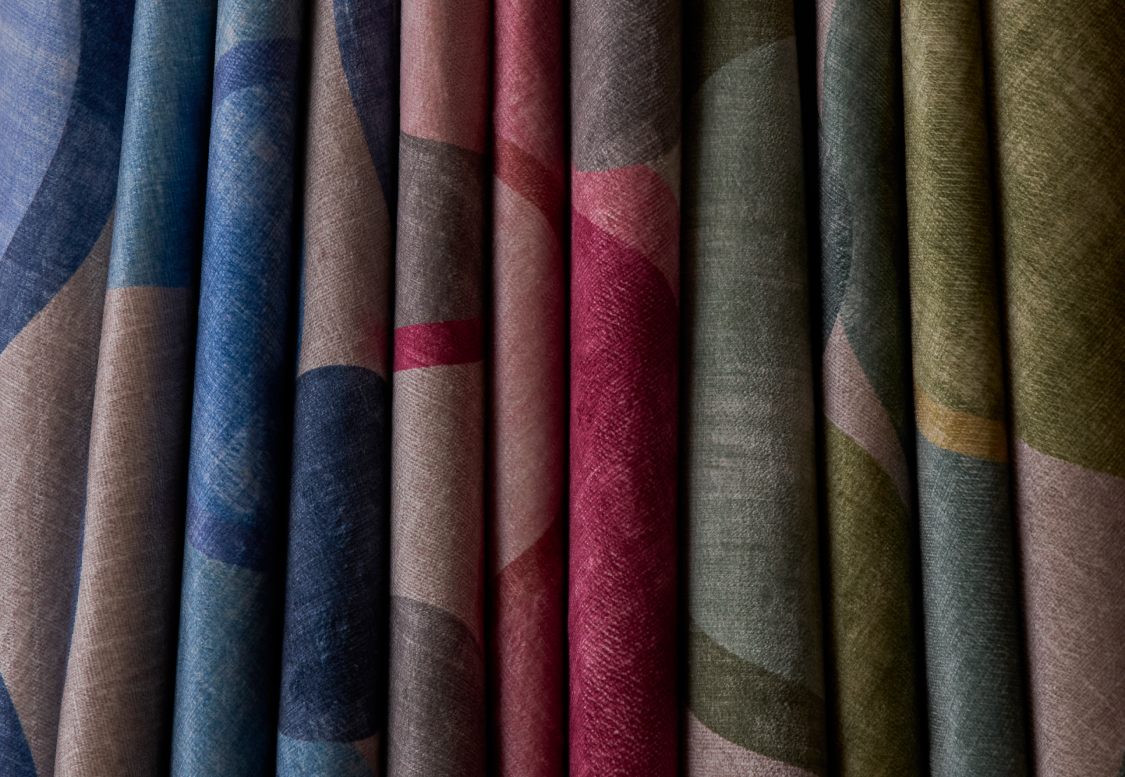
Miranda carried that play of shape and line into the textiles, using fabrics from the FRAME collection to create an appliqué wall hanging from geometric pieces of pattern and colour. Layered over one of Nithurst’s existing tapestries, it brought a new graphic element into the room, with the same approach carried through into the scatter cushions.

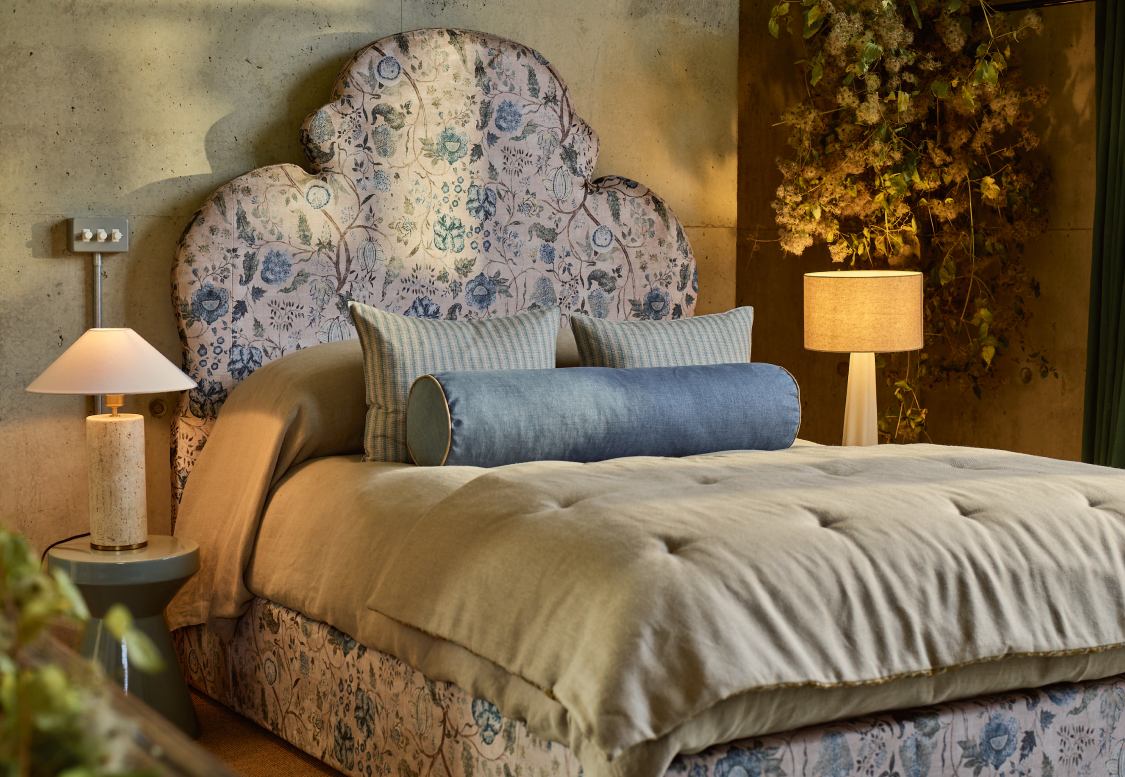
“I think any layering up of texture and pattern, it just makes a space feel comfortable and finished.”
A scheme takes shape in response to the room itself. Architecture, furniture and textiles begin to influence one another once they are brought together.


Trust the room, and yourself
For all the thought that goes in beforehand, Miranda is wary of holding too tightly to a plan.
“Planning is really important… but then actually, when you’re there working on the space, when you’re stepping back and looking at how things are working together, I think you have to run on your instincts.”
That is where experience starts to matter. Once everything is in the room together, colours shift, scale changes, and something that seemed right on paper can feel quite different. Equally, an unlikely pairing can suddenly come alive.
“Sometimes you try something and it just works and you can’t always explain why… it’s a combination that makes you look twice.”

Leave room for surprise
“I think surprise is more important than harmony.”
It is not an argument for chaos. More a reminder that a room needs a little tension to feel alive.
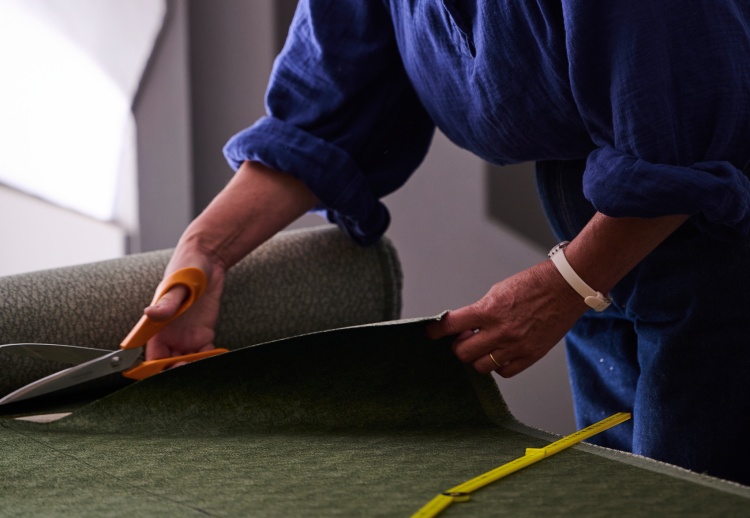
Fabrics give that instinct room to play. Pattern can interrupt a plain, texture can change the way a colour feels, and a familiar fabric can become something quite different once it is cut, layered or placed somewhere unexpected.
Miranda is equally relaxed about taking a risk with colour. One of the best mistakes you can make in a room, she says, is simply to have been too adventurous with it.
But knowing when to stop matters just as much.
“I think you know when to stop when you step back and you either try and add one more thing in and it throws it off course, or, you know, you take something out and it’s perfect.”
Perhaps that is the less visible part of a stylist’s eye: editing as much as adding, and recognising the point at which the room no longer needs anything from you.
What feels contemporary?
That instinct for surprise also shapes Miranda’s idea of contemporary interiors.
“Contemporary isn’t a look, it’s a mood.”
That leaves room for old and new to come together, for pattern to meet pattern, and for polished surfaces to sit beside rougher ones. Contemporary, in Miranda’s terms, is less about following a particular aesthetic than allowing a room to acquire its own character over time.
The spaces she remembers most are those that feel personal rather than perfected.
“The rooms that really stay with me are the ones that are layered with personal details. You know, old things mixed with new things, old memories, something so that when you walk into a room you really get a sense of somebody’s personality.”
It is perhaps no accident that fabric sits so naturally within that way of thinking. It can bring colour, pattern and softness into a room, but it can also carry memory, mood and association. In Miranda’s hands, it becomes part of the way a space acquires its own identity.
FRAME provides the starting point in form, fabric, colour and choice. Miranda’s interpretation at Nithurst shows how much can happen from there.
And, characteristically, hers begins with fabric.


